Dynah Freeman
Crimson LakeDynah Freeman is Lauren Freeman’s sister and Paula Freeman’s daughter. When she enters her family home carrying vegetables, she soon becomes a blunt, skeptical voice in the conversation about Lauren: she objects not to remembering her sister, but to the polished public image that has replaced the complicated person she remembers. Her brief exchange with the investigator opens a tension between grief as private family experience and grief as a story repeatedly told about the dead.
Identity and First Appearance
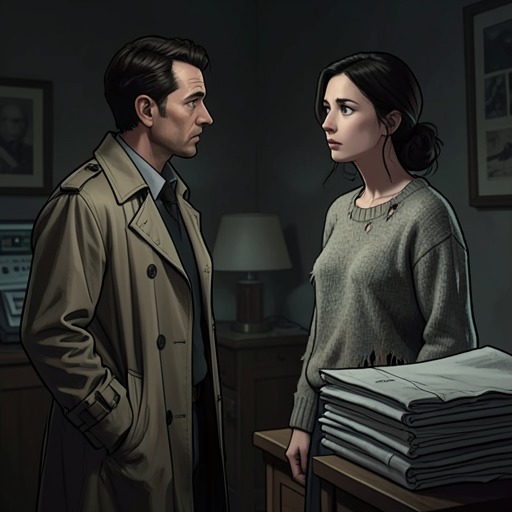
Dynah arrives home in her mid-twenties, shorter and sturdier than Lauren, with a curvy build and sun-kissed appearance. She wears a turquoise apron dusted with the powder used inside food-service gloves and carries shopping bags full of vegetables. The dogs rush to the front door at the sound of a car and footsteps on the porch; seeing the unexpected visitor, Dynah pauses with a short, surprised greeting.
Her arrival shifts the scene from Paula Freeman’s account of Lauren to the presence of someone who knew her as a sister. Dynah is wary of the stranger in the house, and the account notes that she has just lectured her mother about speaking to people who come there. Her skepticism is therefore both personal and situational: she is guarding the family’s space even as she becomes unexpectedly candid about its most painful subject.
The Family’s Memory of Lauren
In the kitchen, Dynah pours herself grapefruit juice while Paula moves about in another room. The silence between mother and daughter gives way when Dynah explains that Paula does not often get to talk about Lauren in the ordinary sense. In Dynah’s view, her mother speaks to Lauren, but not about her. She describes Lauren as still present in the house, always there, with sarcasm that makes clear this continuing presence is not comforting to her.
Dynah’s distinction suggests that remembrance has become a relationship of its own. Paula’s attachment keeps Lauren close, but Dynah sees that closeness as displacing conversation about who Lauren actually was. Her complaint is not that her mother remembers too much; it is that the form of remembrance leaves too little room for the dead woman’s real life or for the living daughter’s response to it.
A Disputed Image
Dynah states the divide most sharply when she contrasts the Lauren her mother carries through the house with the Lauren shown in pictures, books, and magazines. That public-facing Lauren, she insists, was nothing like the sister who died. The contrast makes family memory feel contested: the materials that preserve Lauren for others also seem, to Dynah, to impose a version that erases the person she knew.
The conversation does not disclose what specific parts of Lauren’s life Dynah believes the images leave out. Instead, her candor and visible skepticism establish the emotional force of the disagreement without resolving it. The account describes her hurt over her sister’s ghost as always near the surface, suggesting that this tension is not a passing irritation but an abiding wound.
The Conversation’s Interruption
After Dynah speaks, the investigator begins to ask what she means, but Paula returns and Dynah withdraws, signaling that the conversation is over. The interruption leaves her central claim unexplained: the reader learns that the celebrated or memorialized Lauren differs from the Lauren Dynah remembers, but not yet how. The scene thus gives Dynah a distinct perspective while preserving the limits of what she is willing—or able—to say in her mother’s presence.